Working Hours Font for Embroidery Projects
A First Look at Working Hours
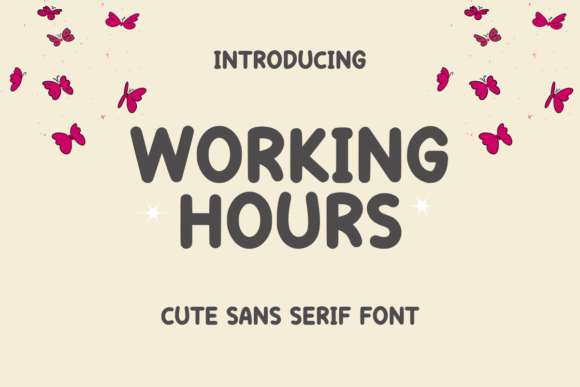
When I first saw Working Hours, I was immediately drawn to its clean, modern feel. As a sans serif font, it carries a sense of simplicity and clarity that makes it ideal for a variety of creative projects. The design has a friendly yet professional vibe, which suggests it could work well in both personal and commercial embroidery applications.
The letters are well-proportioned with consistent stroke widths, giving the font a balanced look. This makes it easy on the eyes and suitable for text-heavy designs like quotes, labels, or short phrases. It doesn’t feel too playful or too formal, making it versatile enough to fit into different contexts—whether you're creating a personalized gift or designing merchandise for a small business.
Real-Life Embroidery Scenario: A Custom Tote Bag
Let’s imagine a real-life scenario where I’m preparing a custom embroidered tote bag for a boutique shop. The client wants something that feels modern but approachable, perfect for a young professional or a college student. Working Hours comes to mind as a great choice for the text on the tote.
I start by visualizing how the font would look stitched onto fabric. Since it's a sans serif typeface, it should stitch cleanly without any unnecessary detail that might complicate the embroidery process. The letters have a smooth curve and straight lines that translate well into satin stitches or fill stitches, ensuring the final result looks crisp and professional.
I also consider the size of the hoop needed for this project. Working Hours is not overly complex, so it shouldn’t require an excessively large hoop. However, I would still test it on scrap fabric first to confirm that the stitch density and thread colors match the intended outcome. For a tote bag, using a light-colored thread on a dark fabric would create a nice contrast and make the text stand out.
Performance in Real Embroidery Situations
Working Hours seems to be a solid option for several embroidery applications. It works particularly well on custom apparel such as sweatshirts, t-shirts, and caps, where readability is key. Its clean lines and lack of intricate details make it a good fit for sweatshirt embroidery or tote bag design.
For personalized gifts, like baby clothes or holiday items, the font's friendly tone could add a nice touch. It might not be the best choice for very detailed embroidered patches or applique designs with lots of curves, but it shines in simpler, more straightforward designs.
In terms of commercial embroidery, Working Hours can be used for small shop products or Etsy listings where the goal is to convey a clean, modern aesthetic. It can also be incorporated into printable mockups or digital embroidery files for designers who want to offer pre-made design assets.
Where to Use with Caution
While Working Hours is a strong contender for many projects, there are some situations where it might not perform as well. For example, if you're working with small hoop sizes or thin fabric, the font may lose some of its clarity. Similarly, when using it on dark fabric or textured surfaces, it's important to ensure that the thread color provides enough contrast to maintain legibility.
If you're planning to use Working Hours on curved surfaces like caps or layered garments, it's essential to test the design first. The font's simplicity might not translate well to dense stitch areas or decorative accents, especially if you're aiming for a more intricate look.
Design Notes for Embroidery Professionals
As an experienced designer, here are a few practical tips for using Working Hours in your embroidery projects:
- Test on scrap fabric before committing to a full project to check stitch density and overall appearance.
- Check thread color contrast against your chosen fabric to ensure the text stands out.
- Review stitch density to avoid overcrowding the design, especially on delicate or stretchy fabrics.
- Confirm hoop size based on the scale of your design and the complexity of the text.
- Inspect small details to ensure the font remains clear even at smaller sizes.
- Test in black and white mockups to see how the design translates across different fabric backgrounds.
- Use proper stabilizer to prevent shifting or puckering, especially on lightweight materials.
- Check licensing before selling finished items or digital products to ensure you're allowed to use the font commercially.
Working Hours has a lot of potential, but like any design asset, it requires thoughtful application. By testing it thoroughly and considering the right context, you can maximize its impact on your handmade product or craft business. Whether you're creating personalized gifts or small shop merchandise, this font offers a fresh, modern look that can elevate your embroidery work and enhance customer engagement.